
House rules matter in short-term rentals. They protect your property, keep neighbors happy, and prevent misunderstandings. Yet most hosts experience the same frustration: guests ignore them.
The issue usually isn’t the rules themselves. It’s how they’re written, framed, and delivered. Many listings bury house rules in long descriptions or attach a dense PDF guests never open. By the time travelers arrive, those rules are already forgotten. A better approach is to design rules that guests naturally accept and remember. When done well, house rules stop problems before they start.
Where Most House Rules Fail
Hosts often assume that stricter rules mean better compliance. The opposite tends to happen. Long lists overwhelm people. Guests scroll past them or skim quickly without absorbing anything. Negative wording creates resistance. A rule that sounds like a warning can make guests feel unwelcome before they even arrive. Placement also matters. If house rules appear only during booking, they vanish from memory days or weeks later. By check-in, guests simply rely on instinct. Vague instructions add another layer of confusion. “Leave the apartment clean” can mean five different things depending on the person. The result is predictable: misunderstandings, small violations, and unnecessary friction. Clearer house rules fix most of this.
Start with Empathy, Not Demands
People respond better to explanations than orders. A blunt instruction like “No pets allowed” can feel arbitrary. Guests may question it or try to negotiate. But when the rule carries context, it becomes easier to accept. “Pet-free home to protect guests with allergies and maintain cleanliness for everyone.” The rule stays the same. The tone changes everything. Quiet hours offer another example. “No noise after 10 PM” sounds restrictive. Instead, explain the reason. “Quiet hours from 10 PM to 7 AM help local families and neighbors sleep peacefully.” Most travelers want to be respectful guests. When they understand the purpose behind a rule, compliance increases without pressure.
Be Specific and Visual
Vague rules invite interpretation. “Respect the property” leaves too much room for guesswork. A clearer version removes ambiguity.
Bad: Respect the property.
Better: Use coasters under drinks. Remove shoes at the entrance. Wipe sandy feet before coming inside.
These instructions take seconds to understand and seconds to follow. Visual cues make them even stronger. A small basket of slippers by the door reinforces the no-shoes rule without a word. A stack of coasters placed on tables signals exactly how to use them. When the environment supports the rule, guests rarely question it.
Keep the List Short
Hosts often try to cover every possible scenario. The result is a rulebook no one reads. Focus on the handful of house rules that truly protect your property and guest experience. Three to five rules are usually enough. A simple structure might look like this:
- Quiet Hours 10 PM – 7 AM. Please keep music low and voices down.
- No Smoking or Vaping Not permitted indoors or on balconies. A $250 cleaning fee may apply if smoke odor is detected.
- Maximum Occupancy Up to 6 registered guests. Please no additional visitors after 10 PM.
- Checkout Checkout is at 11 AM. Before leaving, place towels in the bathroom and start the dishwasher.
- Security Lock doors, windows, and the balcony when leaving the apartment.
Short lists stick in memory. Long lists disappear.
Timing Matters More Than Placement
Even the best house rules fail if guests only see them once. Good hosts introduce them at three natural moments during the stay. Before arrival, highlight the most important guidelines in the confirmation message. A short reminder works better than a long document. At check-in, reinforce key rules visually. A small sign near the entryway for shoes, a quiet-hours note on the fridge, or a checkout checklist on the wall. During the stay, keep rules accessible. Guests should be able to check them quickly without digging through emails. When rules appear at the right moment, they feel helpful rather than restrictive.
Fair Consequences Build Credibility
House rules need consequences, but tone matters.
Threats rarely work. Calm statements do. “Smoking inside requires a $250 deep cleaning due to odor removal.” The message is simple and factual. Guests understand the cost and the reason behind it. Trust grows when expectations feel reasonable and transparent.
Small Psychological Tricks That Work
Behavior often follows subtle cues. Social proof helps. When guests believe most people follow a rule, they tend to follow it as well. “Most guests appreciate our quiet hours—it helps everyone recharge.” Commitment also increases compliance. A simple message before arrival can make a difference. “Please confirm that you’ve read the house rules and checkout instructions.” When guests acknowledge something directly, they feel responsible for honoring it. Positive wording works better than constant negatives. “Help us keep the home fresh for future guests” feels different from “Do not smoke.” The behavior stays the same, but the atmosphere changes.
Digital Guides Make Rules Easier to Follow
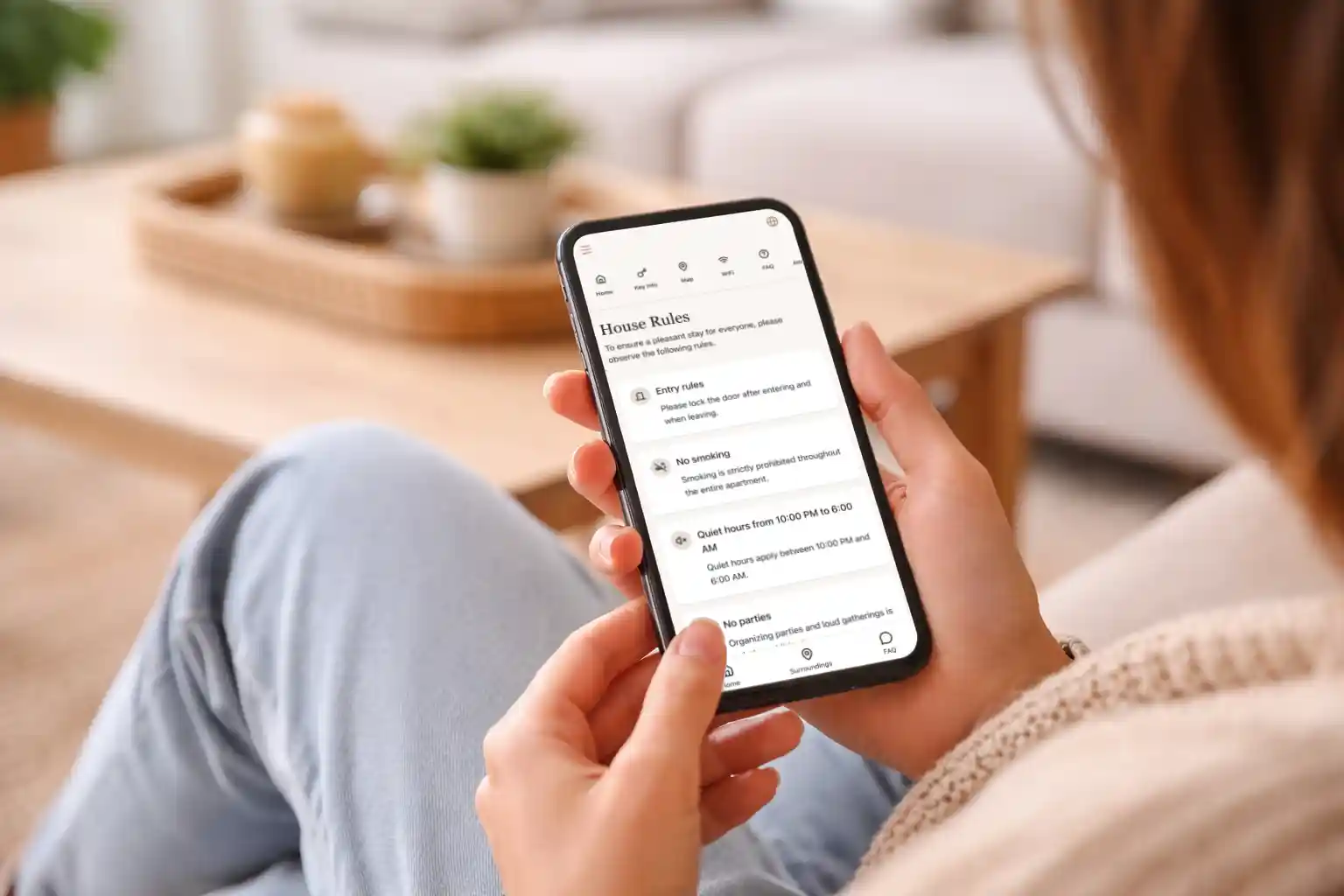
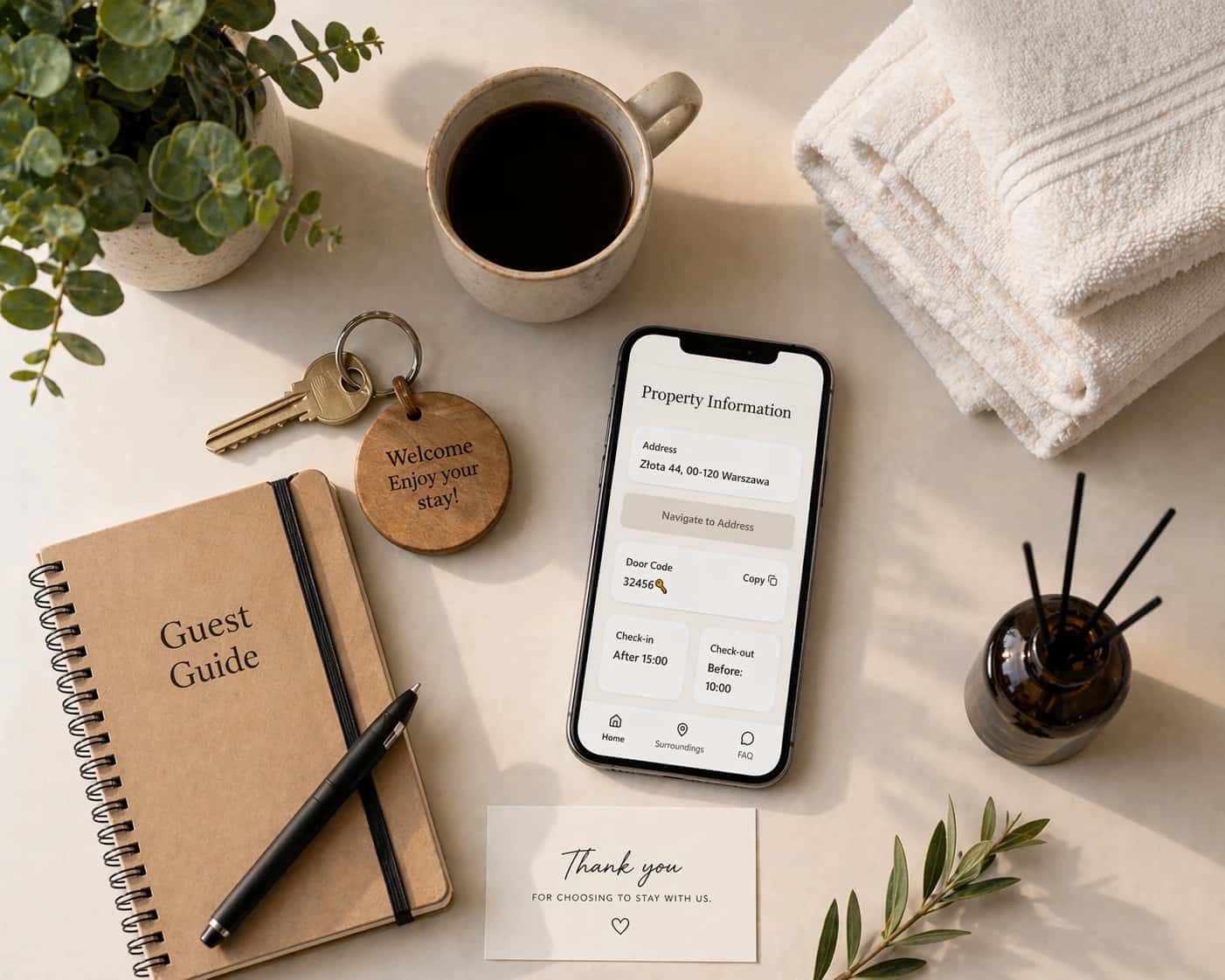
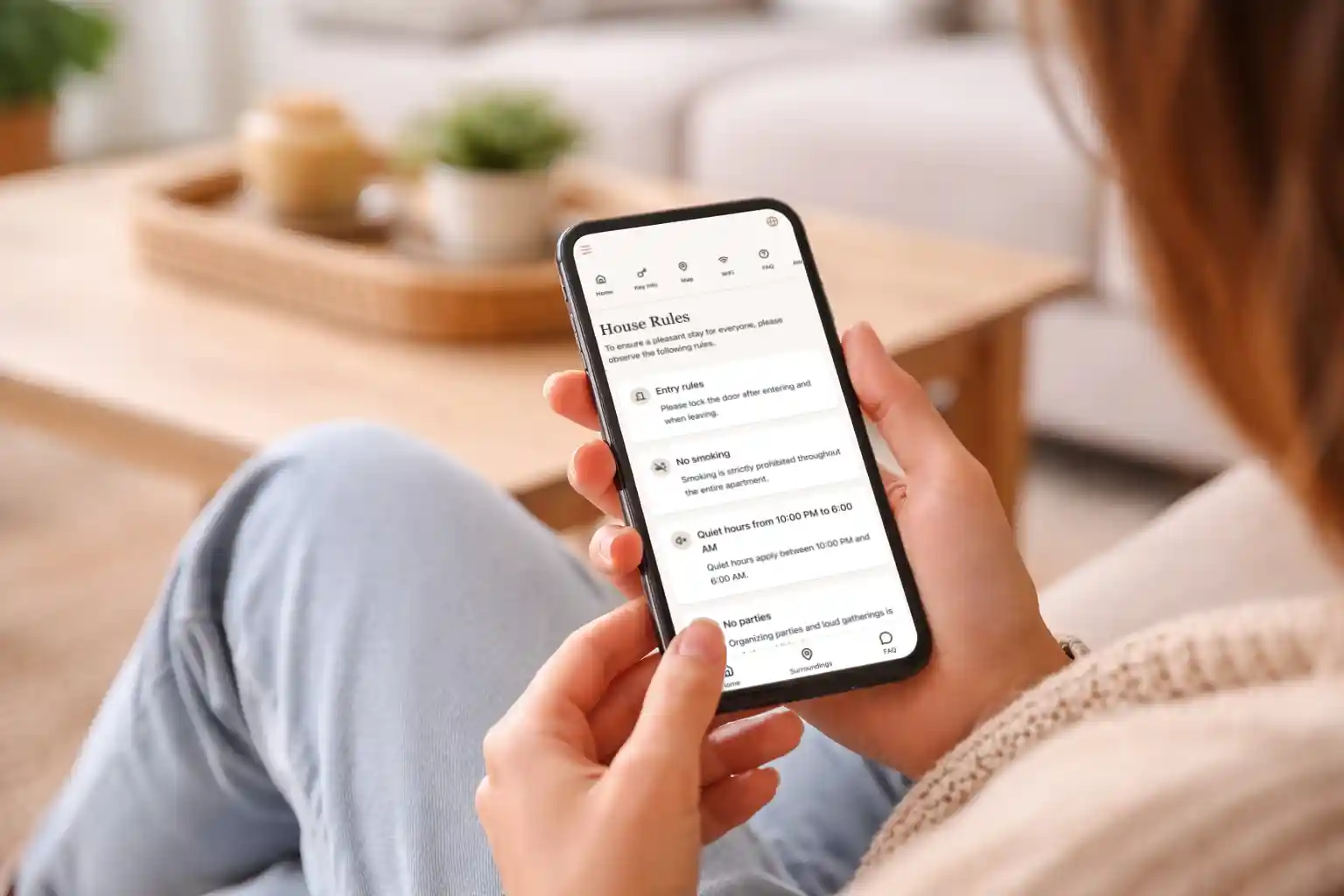
Printed binders used to be standard in short-term rentals. Today they often sit untouched on a shelf. Guests rely on their phones for almost everything during a trip. When house rules live on a mobile-friendly page, they’re easier to access and revisit.
A digital guest guide can include:
- house rules
- Wi-Fi details
- checkout steps
- parking instructions
- emergency contacts
Guests check it whenever they need information instead of searching through old messages. That small convenience reduces confusion throughout the stay.
Test and Adjust Over Time
Every rental property develops its own patterns. Maybe guests keep leaving wet towels on beds. Maybe shoes appear throughout the living room despite a no-shoes rule. Maybe checkout instructions cause the most confusion. These moments are useful signals. Add a small sign where the issue happens. Adjust wording. Move a rule to a more visible location. Even small changes can make a noticeable difference. Some hosts report cutting rule violations dramatically simply by replacing long text with short photo checklists.
A Simple Template You Can Use
If you’re writing house rules for your Airbnb or vacation rental, this structure works well for most properties:
- Quiet Hours Please keep noise low between 10 PM and 7 AM to respect neighbors.
- Shoes Kindly remove shoes at the entrance.
- Smoking Smoking or vaping is not permitted indoors or on balconies.
- Guests Maximum occupancy applies to registered guests only.
- Checkout Checkout is at 11 AM. Please place used towels in the bathroom and start the dishwasher.
Simple. Clear. Easy to follow.
Final Thoughts
Strict house rules rarely solve problems on their own. Guests follow guidelines more willingly when they understand them and encounter them naturally during the stay. Clear wording helps. Good timing helps more. When rules feel reasonable and easy to follow, most guests cooperate without hesitation. The home stays in better condition, neighbors remain happy, and reviews reflect the smooth experience. In the end, good house rules aren’t about control. They’re about clarity.